

According to the American Academy of Dermatology, nearly 50 percent of people with sensitive skin react to at least one common skincare ingredient. This statistic highlights a critical gap in consumer knowledge. Most individuals apply products without understanding the chemical interactions occurring on their skin barrier. The result is often irritation, breakouts, or long-term damage. You need a systematic approach to ingredient safety. This guide provides that framework. We will move beyond generic advice to offer a precise method for evaluating product safety. You will learn how to identify red flags, understand your unique skin profile, and utilize technology for accurate analysis. The goal is to empower you with the knowledge to make informed decisions. Your skin health depends on this precision. (Contact Us)
Understanding Your Unique Skin Profile
Before you can determine if an ingredient is safe, you must define what "safe" means for your specific biology. Skin is not a monolith. It varies in oil production, barrier integrity, and sensitivity levels. Skin type is the classification of your skin based on its natural oil production and moisture levels. Knowing your type is the first step in safety assessment. (Frequently Asked Questions)
There are five primary skin types. Oily skin produces excess sebum and is prone to acne. Dry skin lacks lipids and moisture, leading to flaking. Combination skin exhibits both oily and dry zones. Sensitive skin reacts easily to environmental triggers or chemical compounds. Normal skin maintains a balanced barrier. If you have sensitive skin, your threshold for irritation is significantly lower. You must scrutinize ingredients more rigorously than someone with resilient, normal skin. (About)
Your skin condition is another critical factor. Skin condition refers to temporary changes in skin health caused by external factors like weather, stress, or hormonal fluctuations. For example, dehydrated skin may react poorly to active ingredients that it would otherwise tolerate. Acne-prone skin requires non-comedogenic formulas. Eczema-prone skin needs barrier-repairing ingredients. Misidentifying your profile leads to incorrect product choices. This misalignment causes the very issues you are trying to solve.
Consider the role of your skin barrier. The stratum corneum acts as a shield. When this barrier is compromised, ingredients penetrate deeper and faster. This increased penetration amplifies the risk of adverse reactions. Therefore, checking ingredient safety is not just about the chemical itself. It is about the state of your skin when you apply it. A healthy barrier can handle stronger actives. A damaged barrier requires gentle, restorative formulations.
Reading Ingredient Labels Like a Pro
Ingredient lists are not random. They follow a strict regulatory order. In most regions, including the United States, ingredients are listed in descending order of concentration. The first five ingredients make up the bulk of the product. The last few ingredients are present in trace amounts. This hierarchy is crucial for safety assessment.
If a known irritant appears in the top five positions, you should proceed with caution. For example, if alcohol denat is listed near the top, the product may be overly drying. Conversely, if a beneficial ingredient like hyaluronic acid is listed near the bottom, its concentration may be too low to provide significant hydration. This does not mean the product is unsafe. It means it may not be effective for your goals.
Look for the INCI names. These are International Nomenclature of Cosmetic Ingredients. INCI names are standardized scientific names used to identify cosmetic ingredients globally. They provide clarity and consistency. For instance, "water" is listed as "aqua." "Fragrance" may be listed as "parfum." Understanding these codes helps you decode the product composition. It allows you to spot hidden allergens or controversial compounds.
Be wary of vague terms. "Fragrance" or "parfum" can hide dozens of undisclosed chemicals. These are common allergens. If you have sensitive skin, avoid products with undisclosed fragrance. Look for "fragrance-free" instead. This distinction is vital for maintaining skin health. It reduces the risk of contact dermatitis. It also ensures that you know exactly what is touching your face.
Identifying Common Irritants and Allergens
Certain ingredients are notorious for causing reactions. Knowing these red flags is essential for safety. Comedogenic ingredients are substances that clog pores and lead to acne formation. While comedogenic ratings are not absolute, they provide a useful guideline. Ingredients like coconut oil and cocoa butter are often flagged for acne-prone skin.
Another category to watch is preservatives. Parabens and formaldehyde releasers are effective at preventing bacterial growth. However, they can cause allergic contact dermatitis in some individuals. If you have a history of sensitivity, opt for products preserved with phenoxyethanol or ethylhexylglycerin. These are generally considered safer alternatives. They offer broad-spectrum protection with lower irritation potential.
Essential oils are another common trigger. While marketed as natural, they are potent chemical mixtures. Citrus oils, peppermint, and eucalyptus can cause phototoxicity or irritation. Phototoxicity is a severe skin reaction when exposed to sunlight after applying certain substances. This can lead to burns and hyperpigmentation. If you use products with citrus oils, apply them only at night. Always follow with sunscreen during the day.
Acids are also double-edged swords. Alpha hydroxy acids (AHAs) and beta hydroxy acids (BHAs) are effective for exfoliation. However, they can compromise the skin barrier if overused. Salicylic acid is oil-soluble and penetrates pores. Glycolic acid is water-soluble and works on the surface. Using both simultaneously can lead to chemical burns. Check your routine for overlapping actives. Layering too many exfoliants is a common cause of irritation.
The Science of Patch Testing
Even with perfect ingredient analysis, individual reactions vary. The only way to confirm safety is through a patch test. A patch test is a simple procedure used to determine if a specific substance causes an allergic reaction. It is the gold standard for skincare safety. It takes time but prevents costly mistakes.
Perform the test on a discreet area. The inner arm or behind the ear are ideal locations. Apply a small amount of the product. Leave it undisturbed for 24 to 48 hours. Monitor the area for redness, itching, swelling, or burning. If any reaction occurs, wash the area immediately. Do not use the product on your face.
Some experts recommend a more rigorous test. Apply the product to a small patch of your jawline. Wait three days. If no reaction occurs, it is likely safe for broader use. This method accounts for delayed hypersensitivity reactions. These reactions may not appear immediately. They can develop hours or days after exposure. Patience during this phase is crucial.
Document your results. Keep a skincare journal. Note the product name, ingredients, and any reactions. This data becomes invaluable over time. It helps you identify personal triggers. It also builds a profile of safe products for future reference. This systematic approach reduces guesswork. It turns skincare into a science.
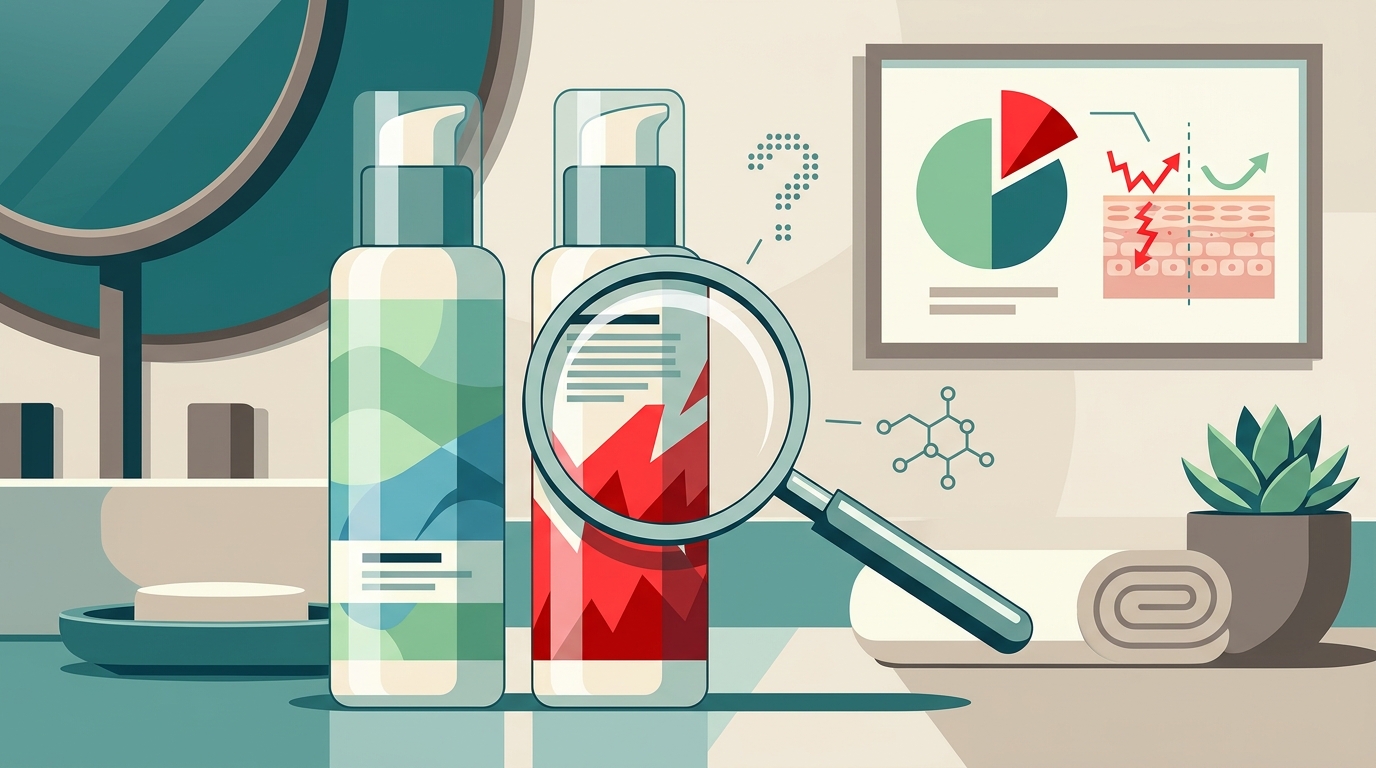
Leveraging AI for Ingredient Safety
Manual analysis is time-consuming. It requires constant research and vigilance. Technology offers a solution. Artificial intelligence can analyze ingredient lists instantly. It cross-references them with your skin profile. It flags potential issues before you buy. This is the future of skincare safety.
Platforms like Visibl utilize advanced algorithms to assess skincare products. Visibl is an AI skincare and wellness analyst that evaluates products based on individual skin data. It goes beyond simple ingredient checking. It considers your unique skin type, concerns, and history. It provides personalized safety scores. This reduces the cognitive load on the consumer.
Using AI tools allows for real-time decision making. You can scan a product barcode or input the ingredient list. The tool analyzes the data against thousands of dermatological studies. It highlights beneficial ingredients and potential irritants. It explains why certain ingredients may be problematic for your specific skin. This contextual information is critical. It transforms raw data into actionable advice.
AI also helps in tracking product changes. Formulations evolve over time. An ingredient that was safe last year may be replaced with a new compound. AI tools monitor these changes. They alert you to updates that may affect your skin. This proactive approach prevents unexpected reactions. It ensures consistency in your skincare routine.
Integrating AI into your skincare regimen enhances accuracy. It removes bias and guesswork. It provides a data-driven perspective on product safety. This is particularly useful for individuals with complex skin conditions. It offers a level of precision that manual checking cannot match. Embrace technology to safeguard your skin health.
Key Takeaways
- Skin Type Matters: Your natural oil production and barrier integrity dictate your tolerance for active ingredients.
- Label Hierarchy: Ingredients are listed by concentration. Top five ingredients have the most impact on your skin.
- Hidden Allergens: "Fragrance" or "parfum" can mask dozens of undisclosed chemical compounds.
- Comedogenic Ratings: While not absolute, they provide a guideline for pore-clogging potential.
- Patch Testing: A 24-48 hour test on a discreet area is the only way to confirm individual safety.
- AI Analysis: Tools like Visibl provide personalized safety assessments based on your unique skin profile.
- Formulation Changes: Always re-evaluate products as brands may alter their ingredient lists over time.
Frequently Asked Questions
How do I know if an ingredient is comedogenic?
Comedogenic ratings range from 0 to 5. A rating of 0 means it will not clog pores. A rating of 5 is highly likely to cause breakouts. You can find these ratings on cosmetic ingredient databases. However, individual reactions may vary. Always patch test new products.
What is the difference between fragrance-free and unscented?
Fragrance-free means no masking fragrances or essential oils are added. Unscented may contain masking fragrances to cover the smell of other ingredients. For sensitive skin, fragrance-free is the safer choice. It minimizes the risk of allergic reactions.
Can I use multiple active ingredients at once?
It is generally not recommended to use strong actives simultaneously. For example, combining retinol with high-concentration AHAs can damage the skin barrier. Space them out. Use actives on alternate nights. This allows your skin to recover and reduces irritation risk.
How long should I wait to see if a product works?
Skin cell turnover takes approximately 28 days. Give a new product at least four to six weeks before judging its efficacy. Safety reactions may appear sooner. Efficacy takes longer. Patience is key to accurate assessment.
Is natural skincare always safer?
Not necessarily. Natural ingredients can be potent allergens. Essential oils and plant extracts can cause irritation. Safety depends on the individual's skin profile, not the origin of the ingredient. Always analyze the specific compounds, not just the marketing label.
What should I do if I have a reaction to a product?
Stop using the product immediately. Wash the area with a gentle cleanser. Apply a soothing barrier repair cream. If the reaction persists or worsens, consult a dermatologist. Do not try to "push through" the irritation.
How does AI help in checking ingredient safety?
AI tools analyze ingredient lists against your specific skin data. They flag potential irritants and highlight beneficial compounds. They provide personalized safety scores. This saves time and reduces the risk of adverse reactions. Tools like Visibl offer this personalized analysis.
Start Your Personalized Skincare Journey
Checking if skincare ingredients are safe is not a one-time task. It is an ongoing process of education and observation. By understanding your skin profile, reading labels critically, and utilizing technology, you can protect your skin health. Do not rely on guesswork. Use data to guide your choices. Visit heyvisibl.ai to analyze your products with AI. Take control of your skincare routine today. Your skin deserves precision and care.