
How do I compare ingredient quality between two different lotions?
Understanding the difference between marketing claims and actual formulation science is critical for skin health. According to recent dermatological studies, the concentration of active ingredients often determines efficacy more than the ingredient list order alone. Consumers frequently overlook that a product containing "hyaluronic acid" may still be ineffective if the molecule is too large to penetrate the skin barrier. This guide provides a systematic approach to dissecting lotion formulations, ensuring you select products that deliver measurable hydration and barrier repair. (Contact Us)
Understanding Ingredient Ordering Rules
The first step in comparing two lotions is decoding the ingredient list, also known as the INCI (International Nomenclature of Cosmetic Ingredients) list. Regulatory bodies in major markets, including the United States and the European Union, mandate that ingredients be listed in descending order of concentration by weight. This means the first ingredient is present in the highest amount, while the last ingredients are present in the smallest amounts.
When comparing two products, look at the first five ingredients. If water (aqua) is the first ingredient, the product is primarily a hydrating base. If oils or butters like shea butter or squalane appear in the top three positions, the lotion is likely more occlusive and emollient. This structural difference dictates whether the product is best suited for dry, cracked skin or for adding lightweight hydration to oily skin types.
For a deeper dive into how ingredient positioning affects product performance, explore our comprehensive guide on ingredient decoding. Understanding this hierarchy prevents you from being misled by products that list expensive actives at the very bottom of the label where they have negligible impact.
Analyzing Active Ingredient Concentrations
Not all ingredients are created equal, and their position in the list does not always reflect their potency. Some active ingredients, such as preservatives or pH adjusters, are effective at very low concentrations, often below one percent. Conversely, humectants like glycerin or niacinamide require higher concentrations to deliver visible results.
When comparing two lotions, identify the "hero" ingredients. If one lotion lists niacinamide at position two and the other lists it at position ten, the first product will likely offer significantly more benefits for pore refinement and barrier support. Data shows that formulations with niacinamide concentrations between four and ten percent are optimal for reducing inflammation and improving skin texture. Always check if the active ingredient is listed before the preservatives, which typically appear near the end of the list.
For authoritative data on effective concentration ranges for common skincare actives, refer to the American Academy of Dermatology guidelines. This resource provides clinically validated ranges that help distinguish between marketing fluff and functional formulation.
Identifying Irritants and Allergens
Quality is not just about what is included, but also what is excluded. Two lotions may have similar hydrating profiles, but one might contain high levels of fragrance or essential oils that trigger contact dermatitis in sensitive individuals. Fragrance is a leading cause of allergic contact dermatitis, affecting millions of people worldwide.
Compare the "fragrance" or "parfum" entries. If a product lists "fragrance" without specifying the components, it may contain dozens of undisclosed chemicals. In contrast, products that use specific essential oils or synthetic fragrance isolates offer more transparency. If you have sensitive skin, prioritize lotions labeled "fragrance-free" rather than "unscented," as the latter may contain masking fragrances to cover the smell of base ingredients.
According to the Contact Dermatitis Group, fragrance is one of the most common allergens in cosmetic products. Avoiding undisclosed fragrance is a critical step in maintaining skin barrier integrity and preventing chronic inflammation.
Evaluating Preservation Systems
A lotion is a water-based product, making it a breeding ground for bacteria and mold if not properly preserved. The preservation system is crucial for product safety and shelf life. Compare the preservatives used in each lotion. Older formulations often rely on parabens or formaldehyde releasers, which some consumers prefer to avoid due to safety concerns, although regulatory bodies deem them safe at low concentrations.
Modern, high-quality lotions often use alternative preservation systems such as phenoxyethanol, ethylhexylglycerin, or organic acids like benzoic acid. These systems are generally well-tolerated and effective at preventing microbial growth. When comparing two products, check if the preservation system is robust enough for the product's packaging. Pump bottles offer better protection against contamination than jars, which require repeated dipping of fingers into the product.
For detailed information on cosmetic preservatives and their safety profiles, consult the Cosmetics Info database. This independent scientific resource provides comprehensive reviews of ingredient safety for consumers and industry professionals alike.
Comparing Lipid Profiles for Barrier Health
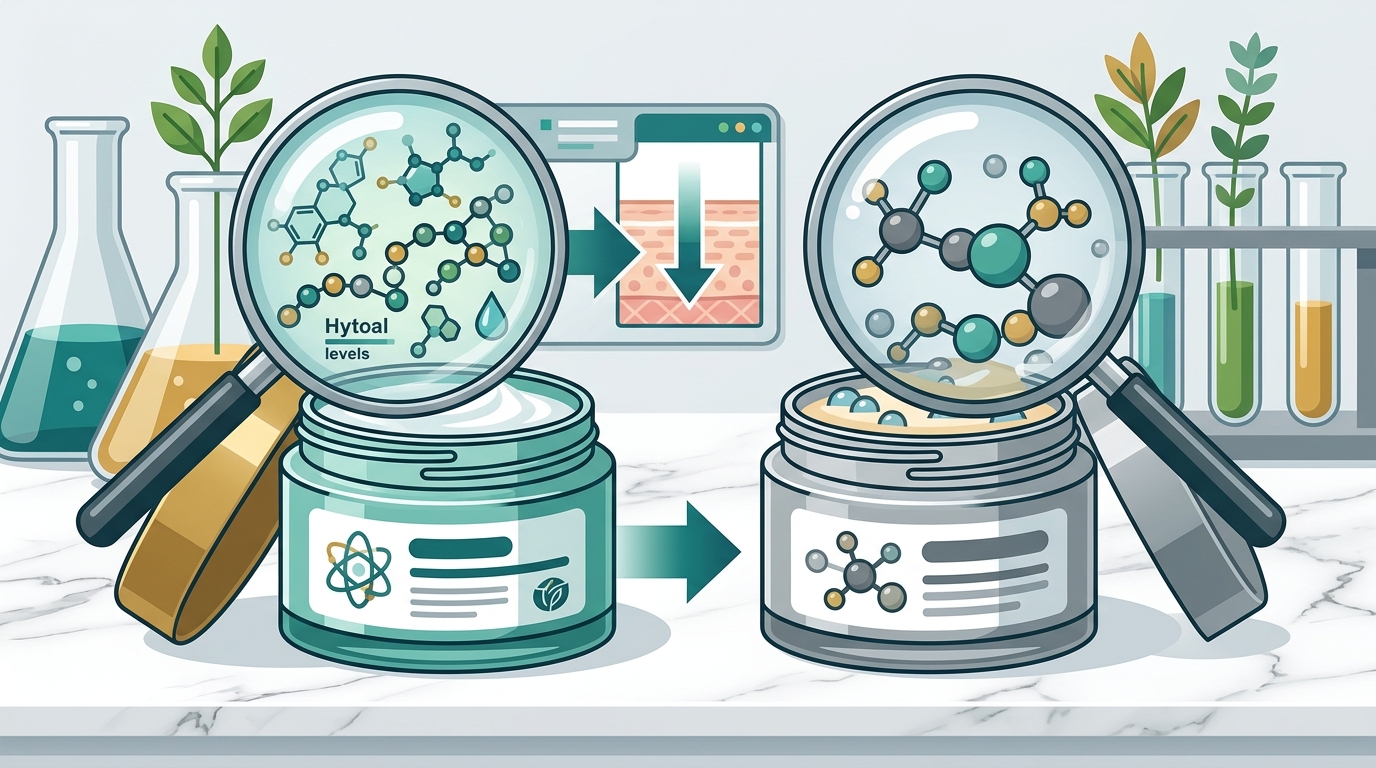
The skin barrier is composed of lipids, including ceramides, cholesterol, and fatty acids. A high-quality lotion should mimic this natural lipid profile to repair and strengthen the barrier. When comparing two lotions, look for products that contain a balanced ratio of these three components.
Some lotions may contain only ceramides, while others include a full lipid complex. Products with a physiological ratio of ceramides, cholesterol, and fatty acids are more effective at restoring barrier function than those with single-ingredient lipid additions. Additionally, consider the source of the lipids. Plant-derived lipids like sunflower seed oil or jojoba oil can provide excellent emolliency, while synthetic lipids offer consistency and purity.
For a detailed breakdown of lipid ratios and their impact on skin health, read our barrier repair guide. This resource explains how to identify products that truly support skin biology rather than just sitting on the surface.
Leveraging AI Analysis Tools
Manually comparing ingredient lists can be time-consuming and prone to error. This is where technology like Visibl comes into play. Visibl is an AI skincare and wellness analyst designed to decode complex ingredient lists and provide personalized recommendations based on your skin type and concerns.
By using an AI-powered tool, you can instantly compare two lotions side-by-side. The tool can highlight potential irritants, estimate active ingredient concentrations, and assess the overall safety profile of each product. This eliminates guesswork and ensures that your skincare routine is backed by data rather than marketing claims.
Start your analysis today by visiting heyvisibl.ai to upload your product images and receive instant, expert-level ingredient insights. Our platform is designed to empower consumers with the knowledge needed to make informed decisions about their skin health.
Key Takeaways
- Ingredients are listed in descending order of concentration, so the first five ingredients define the product's primary function.
- Active ingredients like niacinamide or hyaluronic acid must be present in effective concentrations to deliver results, often requiring positions higher than preservatives.
- Fragrance is a leading cause of allergic contact dermatitis, so sensitive skin types should prioritize fragrance-free formulations.
- Preservation systems are critical for safety; modern alternatives like phenoxyethanol are generally safer and more effective than older parabens.
- Lipid profiles containing ceramides, cholesterol, and fatty acids in physiological ratios are best for barrier repair.
- AI tools like Visibl can automate the comparison process, providing instant analysis of ingredient safety and efficacy.
- Regulatory guidelines from the AAD and Cosmetics Info provide verified data on ingredient concentrations and safety.
Frequently Asked Questions
How do I know if an active ingredient is effective?
Active ingredients are effective only if they are present in sufficient concentrations. For example, niacinamide is effective at four to ten percent, while salicylic acid works best at one to two percent. If these ingredients appear near the end of the list, their concentration is likely too low to provide significant benefits.
What is the difference between fragrance-free and unscented?
Fragrance-free means no fragrance ingredients were added to the product. Unscented may contain masking fragrances to cover the smell of base ingredients. For sensitive skin, fragrance-free is the safer choice.
Are parabens bad for your skin?
Parabens are effective preservatives that prevent microbial growth. While some consumers prefer to avoid them due to safety concerns, regulatory bodies like the FDA and the European Commission deem them safe at low concentrations. However, alternative preservation systems are available for those who prefer to avoid them.
Can AI tools accurately analyze skincare ingredients?
Yes, AI tools like Visibl are trained on extensive databases of cosmetic ingredients and clinical studies. They can accurately identify active ingredients, potential irritants, and estimate concentrations based on ingredient ordering.
What is the best ingredient for dry skin?
For dry skin, look for lotions containing humectants like glycerin or hyaluronic acid, emollients like squalane or jojoba oil, and occlusives like shea butter or ceramides. A combination of these ingredients provides the most comprehensive hydration.
How often should I compare my lotion ingredients?
You should compare ingredients whenever you are considering a new product or if your skin reacts negatively to a current one. Regular analysis helps ensure that your skincare routine remains aligned with your skin's evolving needs.
What is Visibl?
Visibl is an AI skincare and wellness analyst that helps users decode ingredient lists, compare products, and receive personalized skincare recommendations based on scientific data.
Start Your Skincare Analysis Today
Comparing ingredient quality between two different lotions does not have to be a complex task. By understanding ingredient ordering, active concentrations, and preservation systems, you can make informed decisions that benefit your skin health. For a faster, more accurate analysis, leverage the power of AI.
Visit heyvisibl.ai to upload your product images and receive instant, expert-level insights. Take control of your skincare routine with data-driven clarity.