

Modern skincare consumers are increasingly skeptical of marketing claims and demand transparency regarding what they apply to their skin. According to a 2024 report by the Environmental Working Group, over 70% of consumers now check ingredient lists before purchasing beauty products, a significant increase from previous years. This shift has created a massive demand for tools that can decode complex chemical nomenclature instantly. Artificial intelligence has emerged as the primary solution to this problem, offering rapid, data-driven insights that were previously impossible for the average consumer to access. This guide explains how you can leverage AI to analyze your face cream ingredients effectively. (Contact Us)
What Is AI Skincare Analysis?
AI skincare analysis is the application of natural language processing and machine learning algorithms to interpret cosmetic ingredient lists. AI skincare analysis is the automated evaluation of cosmetic components to determine their safety, efficacy, and compatibility with specific skin types. Unlike traditional methods that require consulting dense dermatological textbooks, AI tools process this data in seconds.
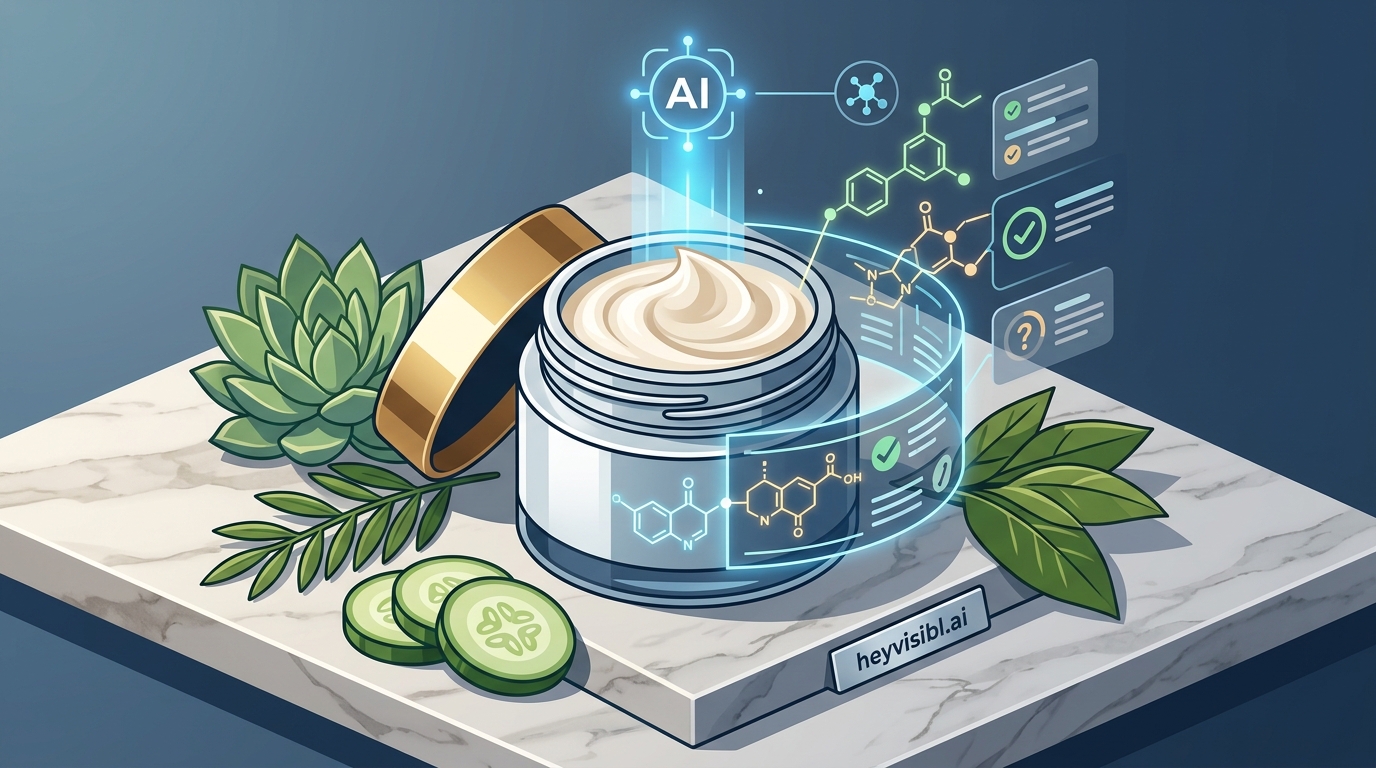
The technology works by cross-referencing ingredient names against vast databases of dermatological research, clinical trials, and toxicological reports. When you input a list of ingredients, the algorithm identifies each compound and assigns it a risk score or benefit rating. This process transforms opaque chemical names into actionable health information. For more details on how these algorithms function, you can read about AI in dermatology research published in medical journals.
How AI Decodes Complex Ingredients
The core challenge in skincare analysis is the complexity of chemical nomenclature. A single face cream may contain 20 to 30 ingredients, many of which have scientific names that are unintelligible to laypeople. AI systems use semantic mapping to translate these names into common concepts. For example, the algorithm recognizes that "tocopherol" is a form of Vitamin E and "niacinamide" is Vitamin B3.
This decoding process relies on extensive training data. The AI has been trained on millions of data points linking specific molecules to skin reactions. According to data from the Cosmetics Ingredient Review, the safety profiles of thousands of cosmetic ingredients are continuously updated. The AI accesses this live data to ensure its analysis is current. It does not rely on static, outdated information.
Identifying Irritants and Allergens
One of the most critical functions of AI analysis is the identification of potential irritants. The system scans for known allergens such as fragrances, certain preservatives, and alcohols. If an ingredient is flagged as a common irritant, the AI highlights it for the user. This is particularly important for individuals with sensitive skin or conditions like eczema. Studies show that contact dermatitis rates are rising due to increased exposure to complex chemical mixtures.
Evaluating Efficacy Claims
Beyond safety, AI evaluates whether the ingredients actually work. It looks for clinically proven concentrations of active ingredients. If a product claims to reduce wrinkles but lists retinol at the very end of the ingredient list, the AI will flag this as a low-efficacy claim. This helps consumers avoid products that are essentially marketing hype with minimal biological impact.
Benefits of Using AI for Skincare
Using AI to analyze face cream ingredients offers several distinct advantages over manual research. The primary benefit is speed. What used to take hours of reading scientific abstracts now takes seconds. This immediacy allows consumers to make informed decisions at the point of purchase, whether in a physical store or online.
Another significant benefit is personalization. Advanced AI tools can factor in your specific skin type, age, and concerns. Personalized skincare analysis reduces the risk of adverse reactions by tailoring ingredient evaluation to individual biological profiles. This level of customization was previously only available through expensive dermatologist consultations.
Cost-Effectiveness
Traditional skincare advice often involves costly professional services. AI tools democratize this access by providing professional-grade analysis at a fraction of the cost. Many platforms offer free or low-cost tiers that make high-quality skincare education accessible to everyone. This shift has empowered consumers to take control of their skincare routines without breaking the bank.
Transparency and Trust
AI promotes transparency in an industry often criticized for greenwashing. By providing objective data on ingredients, AI tools help consumers see past marketing buzzwords. This fosters a more honest relationship between brands and consumers. Brands are increasingly pressured to formulate cleaner products to meet the standards set by these analytical tools.
Limitations and Accuracy Concerns
While AI is powerful, it is not infallible. Understanding its limitations is crucial for accurate interpretation of results. The accuracy of AI analysis depends heavily on the quality and comprehensiveness of its underlying database. If a new ingredient is introduced to the market, there may be a lag time before it is fully integrated into the AI's knowledge base.
Another limitation is the context of concentration. AI can identify an ingredient but may not always know its exact percentage in the formula. This is because ingredient lists are ordered by concentration, but the AI does not have access to the precise formulation data of every product. Therefore, it provides a risk assessment based on the presence of the ingredient rather than its exact dose. For deeper insights into FDA regulations on cosmetic labeling, consumers should refer to official regulatory guidelines.
Individual Biological Variability
AI provides generalized data based on population studies. However, individual skin responses can vary wildly due to genetics, environment, and lifestyle. An ingredient flagged as "safe" for the general population may still cause a reaction in a specific individual. AI cannot replace a patch test or a consultation with a dermatologist for severe skin conditions.
Step-by-Step Guide to Using HeyVisibl
HeyVisibl is designed to simplify this process for users who want quick, accurate insights. Here is how you can use the platform to analyze your face cream.
Step 1: Access the Platform
Visit the HeyVisibl homepage to begin. The platform is optimized for both desktop and mobile devices, allowing you to analyze products while shopping in-store. No complex installation is required.
Step 2: Input Your Data
You can input your data by typing the ingredient list manually or by using the platform's image recognition feature if available. Ensure that you copy the ingredients exactly as they appear on the packaging. Accuracy in input leads to accuracy in analysis.
Step 3: Review the Analysis
Once submitted, HeyVisibl will process the ingredients and provide a detailed breakdown. You will see scores for safety, efficacy, and suitability for your skin type. Pay close attention to any highlighted red flags or warnings.
Step 4: Compare Alternatives
Use the insights to compare your current product with alternatives. HeyVisibl can help you find products with better ingredient profiles that align with your skincare goals. This step is crucial for continuous improvement of your skincare routine.
Key Takeaways
- AI Decodes Complexity: Artificial intelligence translates complex chemical names into understandable safety and efficacy data.
- Speed and Efficiency: Analysis that once took hours is now completed in seconds, enabling real-time decision-making.
- Personalization: AI tools can tailor ingredient analysis to individual skin types and concerns, reducing the risk of irritation.
- Transparency: AI helps cut through marketing hype by providing objective data on ingredient presence and concentration.
- Limitations Exist: AI relies on database accuracy and cannot account for individual biological variability or exact formulation concentrations.
- Complementary Tool: AI analysis should complement, not replace, professional dermatological advice for severe skin conditions.
- Empowerment: Access to AI tools democratizes skincare knowledge, allowing consumers to make more informed choices.
Frequently Asked Questions
Is AI analysis of skincare ingredients accurate?
AI analysis is highly accurate for identifying known ingredients and their general safety profiles. However, it may not account for individual allergic reactions or the exact concentration of active ingredients in a specific product.
Can AI detect hidden allergens in face cream?
AI can identify common allergens listed in the ingredient deck. However, it cannot detect undeclared ingredients or trace contaminants that are not listed on the label. Always check for "may contain" warnings on packaging.
How does HeyVisibl differ from other skincare apps?
HeyVisibl focuses on providing a streamlined, AI-driven analysis specifically tailored for skincare and wellness. It emphasizes user-friendly interfaces and rapid insights, making it easier for consumers to understand complex ingredient lists without prior knowledge.
Do I need to create an account to use the analysis tool?
Account requirements vary by platform. Many tools offer basic analysis without an account, but personalized features and history tracking usually require registration. Visit the HeyVisibl site for current access details.
Can AI replace a dermatologist?
No. AI provides data-driven insights but cannot diagnose skin conditions or provide medical treatment. It is a tool for education and prevention, not a substitute for professional medical care.
What is the most important ingredient to look for in anti-aging creams?
Ingredients like retinol, peptides, and vitamin C are widely recognized for their anti-aging benefits. AI analysis can help you verify if these ingredients are present in effective concentrations in your chosen product.
How often should I analyze my skincare products?
It is recommended to analyze new products before use. If your skin condition changes, you may want to re-evaluate your current routine to ensure it still meets your needs.
Start Your Skincare Journey
Take control of your skincare routine today by leveraging the power of artificial intelligence. Stop guessing and start knowing what is on your skin. Visit HeyVisibl.ai to begin analyzing your face cream ingredients and discover a healthier, more informed approach to skincare.