
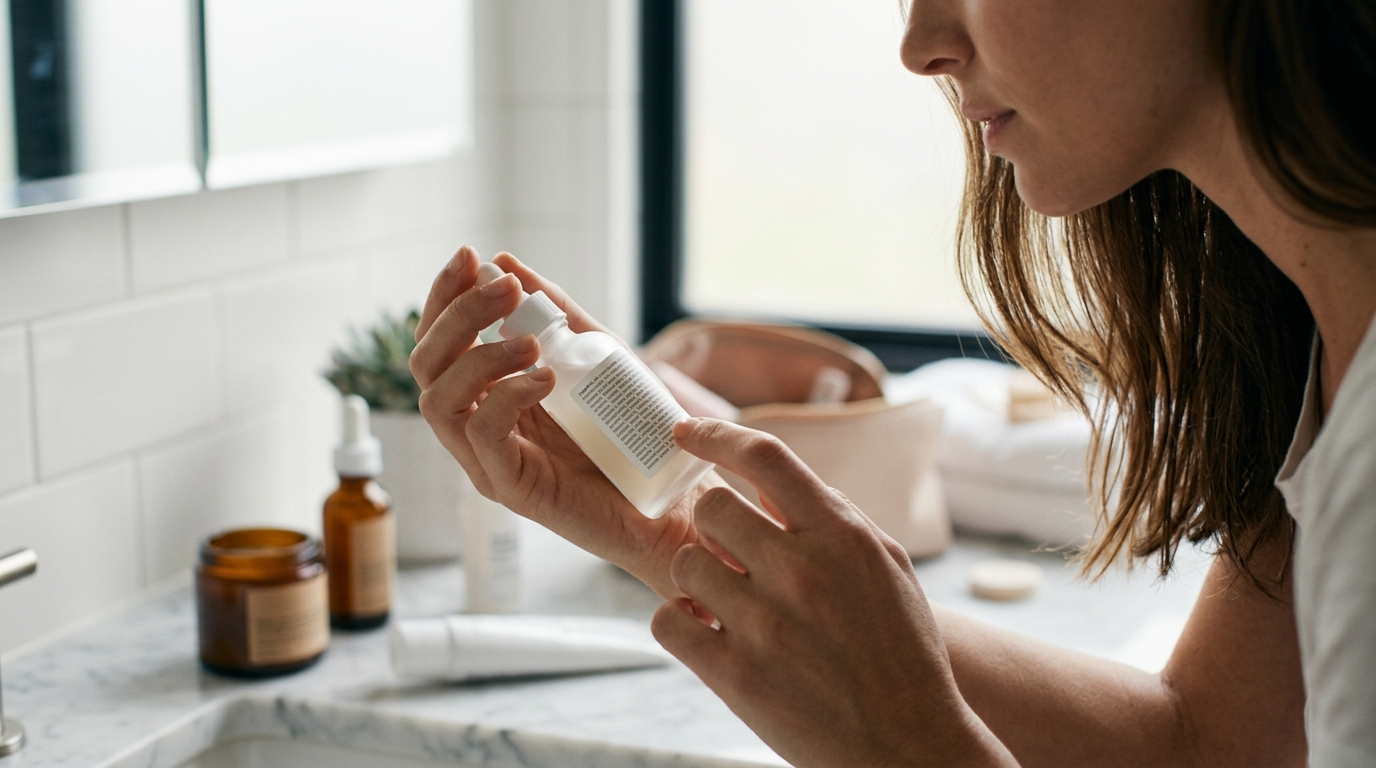
Understanding what you put on your skin is no longer optional. According to a 2024 report by the Environmental Working Group, the average consumer uses 12 personal care products daily, exposing their skin to over 160 unique chemical compounds. This high volume of exposure makes ingredient literacy a critical component of modern skincare routines. Without the ability to decode product labels, you risk using formulations that contradict your skin goals or trigger adverse reactions. This guide provides the structural knowledge needed to analyze any product with confidence.
Understanding Ingredient Order and Concentration
The most fundamental rule of skincare labeling is the order of ingredients. In most major markets, including the United States and the European Union, ingredients must be listed in descending order of concentration. This means the first ingredient is the most abundant, while the last ingredients are present in the smallest amounts.
Water is often the primary ingredient. In many serums and lotions, water (listed as Aqua) appears first. This does not mean the product is ineffective. It simply indicates that the base of the formulation is aqueous. The active ingredients you care about, such as retinol or vitamin C, may appear further down the list if they are potent and required in lower concentrations.
Ingredients present at less than one percent concentration do not need to follow strict descending order. They can appear in any sequence after the one-percent mark. This is why you might see trace amounts of preservatives or botanical extracts listed near the end of the label. Understanding this threshold helps you distinguish between marketing claims and actual formulation strength.
Key Ingredient Categories to Know
Skincare ingredients generally fall into three functional categories: actives, humectants, and occlusives. Recognizing these groups allows you to predict how a product will interact with your skin barrier.
Humectants and Hydration
Humectants draw water from the environment or the deeper layers of your skin to the epidermis. Hyaluronic acid is a humectant that holds up to 1,000 times its weight in water. Other common humectants include glycerin, sodium hyaluronate, and propylene glycol. These ingredients are essential for plumping the skin and reducing the appearance of fine lines caused by dehydration.
Emollients and Occlusives
Emollients fill the spaces between skin cells to create a smooth surface. Occlusives form a physical barrier that prevents water loss. Common occlusives include petrolatum, dimethicone, and various plant butters like shea butter. If you have dry or compromised skin barriers, products rich in these ingredients are often more effective than those focused solely on hydration.
Active Ingredients
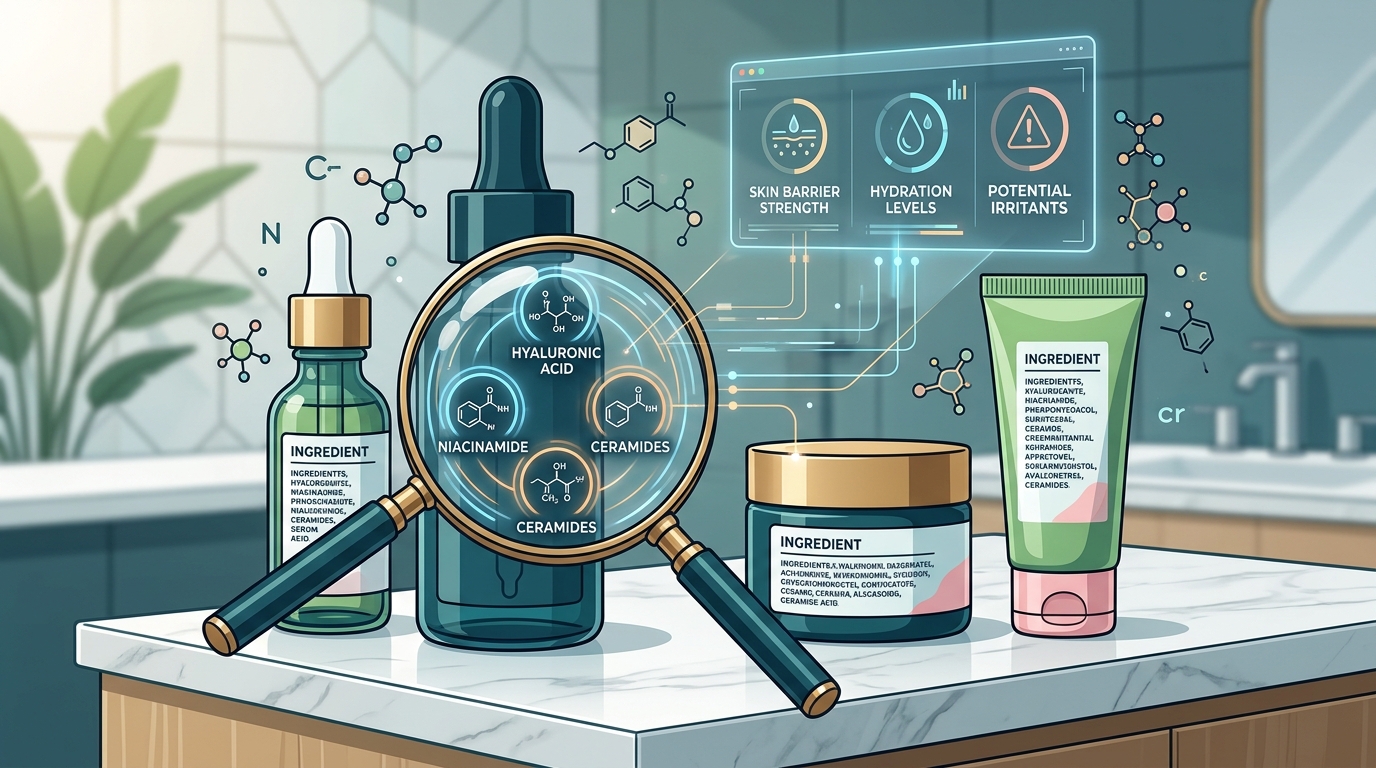
Actives are the ingredients responsible for specific skin benefits, such as exfoliation, brightening, or anti-aging. Examples include salicylic acid, niacinamide, and retinoids. These ingredients often require careful formulation to remain stable and effective. Their position on the ingredient list is a strong indicator of their potential impact on your skin.
Decoding Complex Chemical Names
Skincare labels often use International Nomenclature of Cosmetic Ingredients (INCI) names. These scientific names can look intimidating, but they follow a logical structure. Learning to identify common chemical suffixes can help you quickly categorize ingredients without needing to memorize every single name.
Retinol is a form of vitamin A used to increase cell turnover. It is one of the most researched anti-aging ingredients. Other vitamin A derivatives include retinaldehyde and retinyl palmitate. These ingredients are powerful but can cause irritation if introduced too quickly. Always start with lower concentrations to assess your skin tolerance.
Acids often end in "-ic acid" or "-ol." Salicylic acid, lactic acid, and glycolic acid are common exfoliants. Each has different molecular weights and penetration rates. Salicylic acid is oil-soluble, making it ideal for acne-prone skin. Lactic acid is larger and gentler, suitable for sensitive skin types. Understanding these distinctions prevents you from choosing the wrong exfoliant for your needs.
Fragrance and Preservative Red Flags
Two categories of ingredients often cause confusion and concern: fragrance and preservatives. These are necessary for product stability and sensory appeal, but they can be problematic for sensitive skin.
The Fragrance Loophole
In the United States, "fragrance" or "parfum" is considered a trade secret. This means manufacturers do not have to disclose the specific chemicals used to create the scent. A single ingredient labeled "fragrance" can contain dozens of undisclosed compounds, including potential allergens. If you have sensitive skin or rosacea, look for products labeled "fragrance-free" rather than "unscented," which may still contain masking fragrances.
Preservative Systems
Preservatives prevent the growth of bacteria and mold in water-based products. Without them, your skincare could become a breeding ground for pathogens. Common preservatives include phenoxyethanol, sodium benzoate, and potassium sorbate. While some consumers avoid parabens due to health concerns, extensive research by the Cosmetic Ingredient Review indicates that parabens are safe for use in cosmetics at current concentrations. The risk of microbial contamination often outweighs the theoretical risks of preservatives.
Comparing Formulations for Your Skin Type
Choosing the right product requires matching the ingredient profile to your specific skin concerns. Below is a comparison of common formulations and their ideal use cases.
| Skin Concern | Key Ingredients to Look For | Ingredients to Avoid | Product Type Recommendation |
|---|---|---|---|
| Acne and Congestion | Salicylic Acid, Niacinamide, Zinc | Heavy Oils, Coconut Oil, Lanolin | AI Skin Analysis for precise matching |
| Dryness and Dehydration | Hyaluronic Acid, Glycerin, Ceramides | High Alcohol Content, Sulfates | Hydration Guide |
| Aging and Wrinkles | Retinol, Peptides, Vitamin C | Unstable Antioxidants, Fragrance | Retinol Product Reviews |
| Sensitivity and Redness | Centella Asiatica, Oat Extract, Allantoin | Fragrance, Essential Oils, Alcohol | Book a Demo for sensitive skin protocols |
Using an AI skincare analyst can help you navigate these choices by analyzing your unique skin profile. Manual label reading is effective, but AI can process thousands of data points to predict how ingredients will interact with your specific biology. This reduces the trial-and-error phase of skincare.
Key Takeaways
- Ingredients are listed in descending order of concentration, with the first ingredient being the most abundant.
- Ingredients present at less than one percent can be listed in any order after the one-percent threshold.
- Hyaluronic acid is a humectant that holds up to 1,000 times its weight in water.
- Retinol is a form of vitamin A used to increase cell turnover and reduce signs of aging.
- Fragrance is a trade secret in the US, meaning specific allergens may be hidden from the label.
- Preservatives are essential for safety, and parabens are considered safe by major regulatory bodies.
- AI tools like Visibl can provide personalized ingredient analysis beyond what labels offer.
Frequently Asked Questions
Do ingredients need to be listed in alphabetical order?
No, ingredients are listed by concentration, not alphabetically. The only exception is for ingredients present at less than one percent, which can be in any order.
Is it safe to use products with fragrance?
For most people, fragrance is safe. However, if you have sensitive skin, eczema, or rosacea, fragrance is a common trigger. It is best to choose fragrance-free options.
How do I know if an active ingredient is effective?
Check the ingredient list position. If an active ingredient like vitamin C or retinol is near the end, the concentration may be too low to be effective. Look for products that disclose percentage concentrations.
What is the difference between fragrance-free and unscented?
Fragrance-free means no fragrance ingredients were added. Unscented may contain masking fragrances to cover the smell of other ingredients. Fragrance-free is safer for sensitive skin.
Can I mix multiple active ingredients?
Some actives can be mixed, but others can cause irritation or deactivate each other. For example, mixing retinol with high-strength acids can compromise the skin barrier. Consult a professional or use an AI analysis tool for safe combinations.
Why do some ingredients have long chemical names?
Long chemical names are standard INCI names. They describe the molecular structure of the ingredient. For example, Sodium Hyaluronate is the salt form of hyaluronic acid. These names are regulated and indicate specific chemical properties.
How often should I change my skincare products?
You do not need to change products frequently. Most products take 8 to 12 weeks to show full results. Only change products if you experience irritation or if your skin goals change.
Start Your Skincare Journey with Precision
Reading labels is the first step, but understanding your unique skin biology is the next. Manual analysis is time-consuming and prone to error. Book a demo with Visibl to experience AI-driven skincare analysis. Our platform provides personalized ingredient recommendations based on your specific skin profile, ensuring you use products that truly work for you. Visit heyvisibl.ai to transform your skincare routine with data-backed insights.