

How do I compare ingredient quality between two different lotions?
Understanding the chemical composition of your skincare products is no longer optional for informed consumers. According to recent dermatological studies, the efficacy of topical treatments is directly correlated with the concentration and stability of active ingredients. When you apply a lotion, you are introducing a complex mixture of emollients, humectants, and occlusives to your skin barrier. The difference between a product that heals and one that merely sits on the surface often lies in the molecular weight and penetration depth of its components. This guide provides a rigorous framework for dissecting these formulations to ensure you are investing in genuine skincare value. (Contact Us)
Understanding Ingredient Ordering and Concentration
The first step in comparing two lotions is decoding the ingredient list, which is governed by strict regulatory frameworks in most major markets. In the United States, the Food and Drug Administration (FDA) mandates that ingredients must be listed in descending order of predominance by weight. This means the substance present in the highest quantity appears first, and the one present in the lowest quantity appears last. FDA regulations ensure that consumers can gauge the relative amount of each component in the formula. (Frequently Asked Questions)
When comparing Product A and Product B, look at the top five ingredients. If water is the first ingredient in both, the second and third ingredients become the primary differentiators. A lotion with squalane as its second ingredient will likely offer superior moisturization compared to one with a cheaper synthetic filler like mineral oil or propylene glycol. This structural hierarchy is critical because ingredients listed below 1% do not need to follow the descending order rule, making them difficult to quantify without third-party lab testing.
Analyzing Active Ingredients for Efficacy
Active ingredients are the workhorses of any skincare product. They are responsible for the specific benefits you seek, whether that is hydration, anti-aging, or acne treatment. To compare quality, you must identify the primary active agents and assess their chemical stability and delivery systems.
Hydration Mechanisms
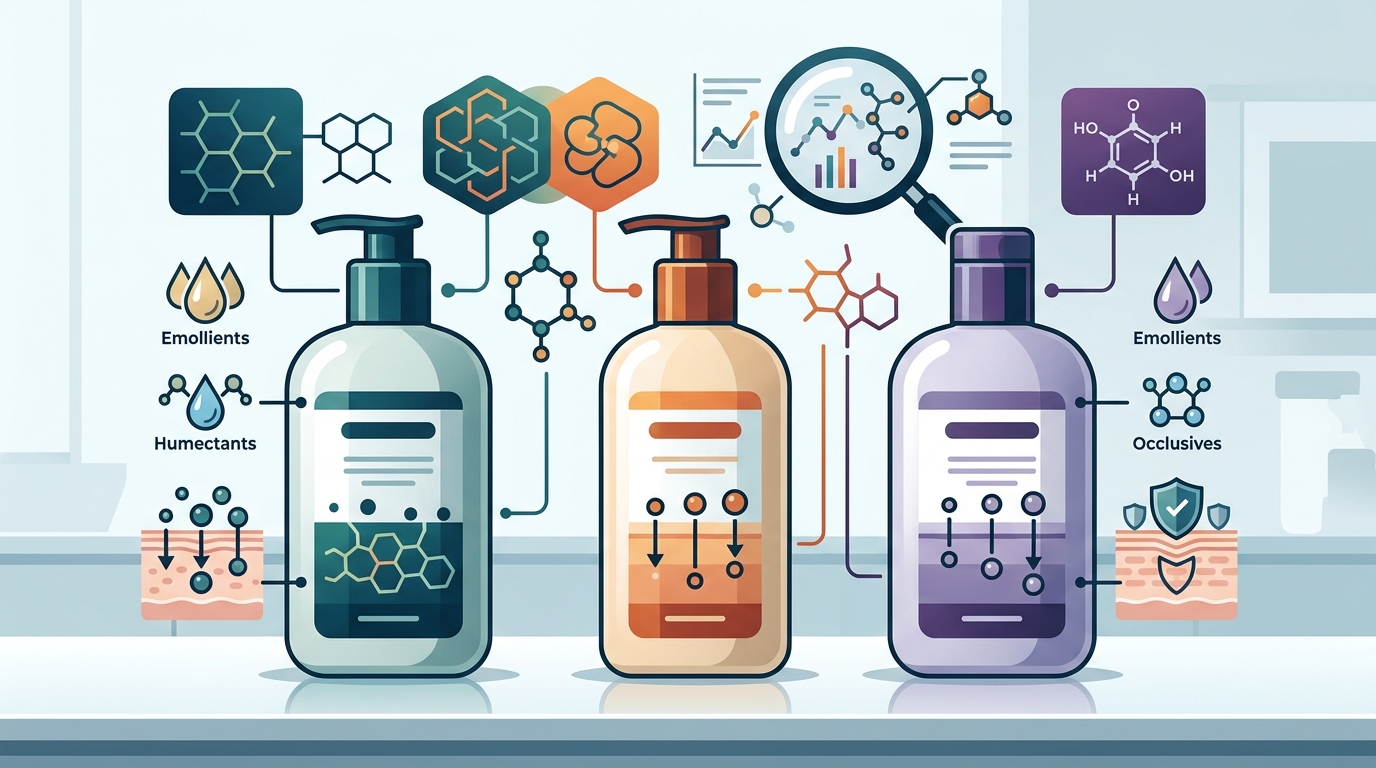
Humectants draw water into the skin, while emollients smooth the skin surface and occlusives prevent water loss. A high-quality lotion will balance these three categories. For instance, hyaluronic acid is a powerful humectant, but its effectiveness depends on its molecular weight. Low molecular weight hyaluronic acid penetrates deeper, while high molecular weight forms a protective film on the surface. Clinical research indicates that combining different molecular weights provides comprehensive hydration benefits.
Barrier Repair Agents
Ceramides, cholesterol, and fatty acids are the building blocks of the skin barrier. When comparing two lotions, check for the presence of these lipids. A formulation that mimics the natural lipid ratio of the skin is generally more effective at repairing damage than one that relies solely on occlusive petrolatum. The presence of niacinamide, a form of vitamin B3, is another strong indicator of quality, as it helps regulate oil production and improves skin elasticity.
Identifying Harmful Additives and Irritants
Ingredient quality is not just about what is included, but also what is excluded. Certain additives can compromise the integrity of the skin barrier or cause long-term sensitivity. Comparing the "free-from" lists of two products can reveal significant differences in their safety profiles.
Preservatives and Parabens
Preservatives are necessary to prevent microbial growth in water-based products. However, some individuals prefer to avoid parabens due to concerns about endocrine disruption. While the scientific consensus remains that parabens are safe in low concentrations, cosmetic safety reviews suggest that alternative preservative systems like phenoxyethanol or ethylhexylglycerin may be preferred by sensitive skin types. Always check if the product uses a broad-spectrum preservative system to ensure it remains safe throughout its shelf life.
Fragrance and Essential Oils
Fragrance is a common allergen and irritant. In ingredient lists, "fragrance" or "parfum" can mask dozens of undisclosed chemicals. When comparing two lotions, the one with no added fragrance or those using only naturally derived essential oils in low concentrations is generally safer for reactive skin. Essential oils, while natural, can be phototoxic or sensitizing if not properly diluted. A high-quality lotion will prioritize skin health over sensory appeal.
Comparing Formulation Stability and Preservation
The physical state of the lotion can indicate the quality of its formulation. Emulsions must be stable to prevent separation of oil and water phases. A well-formulated lotion should have a consistent texture and color throughout its use. Instability can lead to reduced efficacy and potential bacterial growth.
pH Balance
The skin's natural pH is slightly acidic, typically around 4.5 to 5.5. Lotions that maintain this acidic pH help support the skin's acid mantle, which protects against pathogens. Products with a high pH can disrupt this barrier, leading to dryness and irritation. While pH is rarely listed on the label, reputable brands often disclose it in their technical documentation or on their website. Dermatological journals emphasize the importance of pH in maintaining skin barrier function.
Packaging Integrity
Even the best ingredients can degrade if exposed to light, air, or heat. Airless pumps and opaque bottles are superior to jars for preserving the potency of active ingredients like vitamin C and retinol. When comparing two lotions, consider the packaging as part of the ingredient quality assessment. A product in a jar requires you to dip your fingers in, introducing bacteria and oxygen with every use.
Utilizing AI Analysis Tools for Precision
Manual analysis of ingredient lists can be time-consuming and prone to error. Modern technology offers sophisticated tools to automate this process. Visibl provides an advanced platform for analyzing skincare formulations with precision and speed. By leveraging artificial intelligence, users can quickly identify potential irritants, verify active ingredient concentrations, and compare multiple products simultaneously.
Using a tool like Visibl allows you to scan ingredient lists and receive instant feedback on their safety and efficacy. This technology reduces the cognitive load of skincare research and empowers consumers to make data-driven decisions. Instead of relying on marketing claims, you can access objective analysis of the chemical composition of your products.
Key Takeaways
- Ingredients are listed in descending order of weight, so the first few ingredients define the product's core character.
- Active ingredients must be present in effective concentrations to deliver the promised benefits.
- Preservatives are essential for safety, but alternative systems may be better for sensitive skin types.
- Fragrance is a common source of irritation, and fragrance-free options are generally safer for daily use.
- Formulation stability is influenced by pH balance and packaging type, which affect ingredient potency.
- AI-powered analysis tools can streamline the comparison process and provide objective insights.
- Always prioritize products with transparent ingredient lists and reputable brand practices.
Frequently Asked Questions
How do I know if an active ingredient is effective?
Active ingredients must be present in sufficient concentrations to work. Look for products that disclose the percentage of key actives, such as 10% niacinamide or 2% salicylic acid. Ingredients listed near the end of the list are likely present in sub-therapeutic amounts.
What is the difference between natural and synthetic ingredients?
Natural ingredients are derived from plants or minerals, while synthetic ingredients are created in a lab. Neither is inherently better. Synthetic ingredients often offer greater stability and purity, while natural ingredients may provide additional antioxidants. The key is the safety and efficacy of the specific molecule.
Can I use two different lotions together?
Yes, but you must ensure that the ingredients are compatible. Avoid mixing ingredients that can neutralize each other, such as vitamin C and niacinamide in high concentrations, or retinol and alpha hydroxy acids, which can cause excessive irritation.
Why is packaging important for ingredient quality?
Proper packaging protects active ingredients from degradation caused by light, air, and heat. Airless pumps and opaque containers help maintain the potency and safety of the formulation over time.
How does Visibl help compare lotions?
Visibl uses AI to analyze ingredient lists, identify potential irritants, and verify the presence of active ingredients. It provides a comprehensive report that helps you make informed decisions about your skincare products.
What are the most common harmful additives in lotions?
Common harmful additives include parabens, sulfates, phthalates, and synthetic fragrances. These ingredients can cause skin irritation, allergic reactions, or long-term health concerns for some individuals.
Is it better to buy expensive lotions?
Price does not always correlate with quality. Some expensive lotions contain high concentrations of active ingredients, while others charge for branding. Always evaluate the ingredient list and formulation rather than the price tag.
Start Your Skincare Analysis Today
Comparing ingredient quality is the most effective way to ensure your skincare routine delivers real results. By understanding the science behind the formulations, you can avoid marketing hype and invest in products that truly benefit your skin. Take control of your skincare journey by analyzing your current products with precision. Visit heyvisibl.ai to start comparing your lotions and discover the true quality of your skincare regimen.