
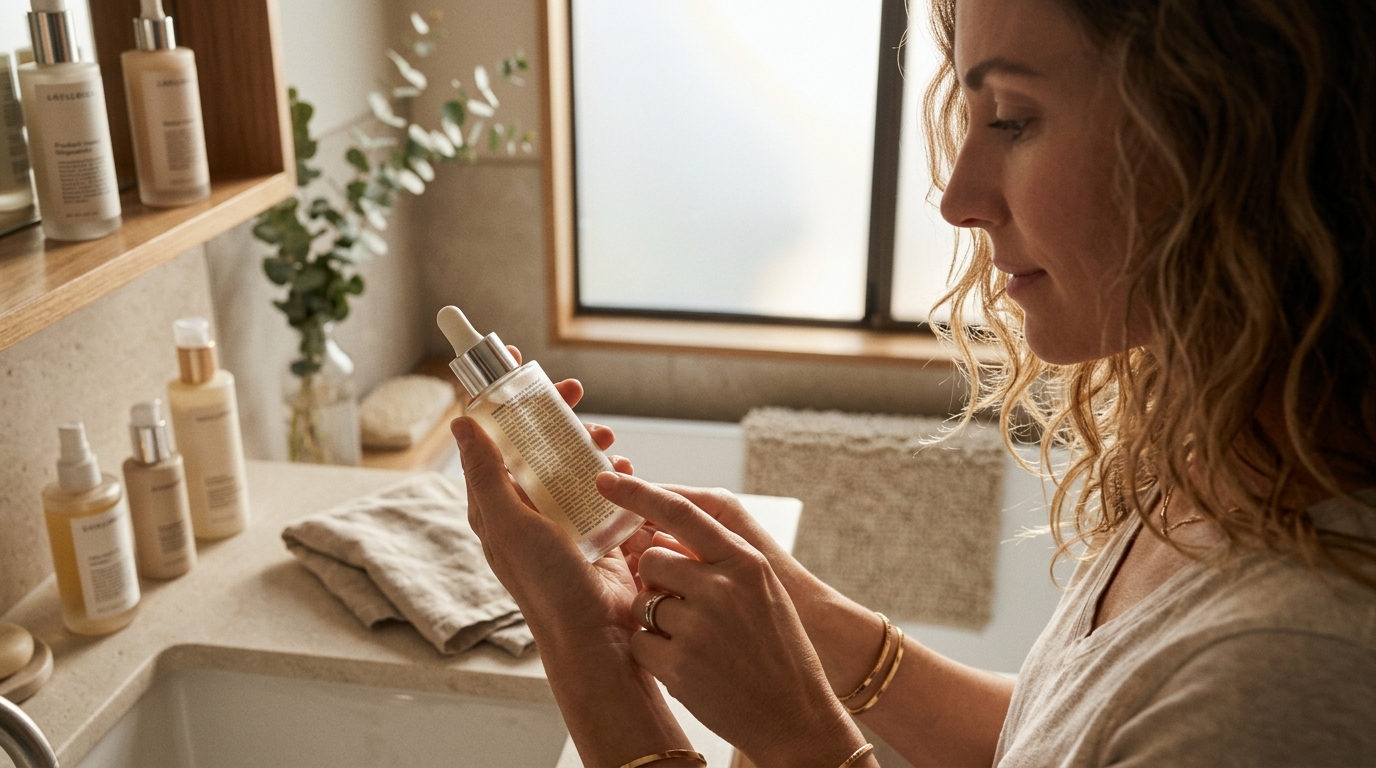
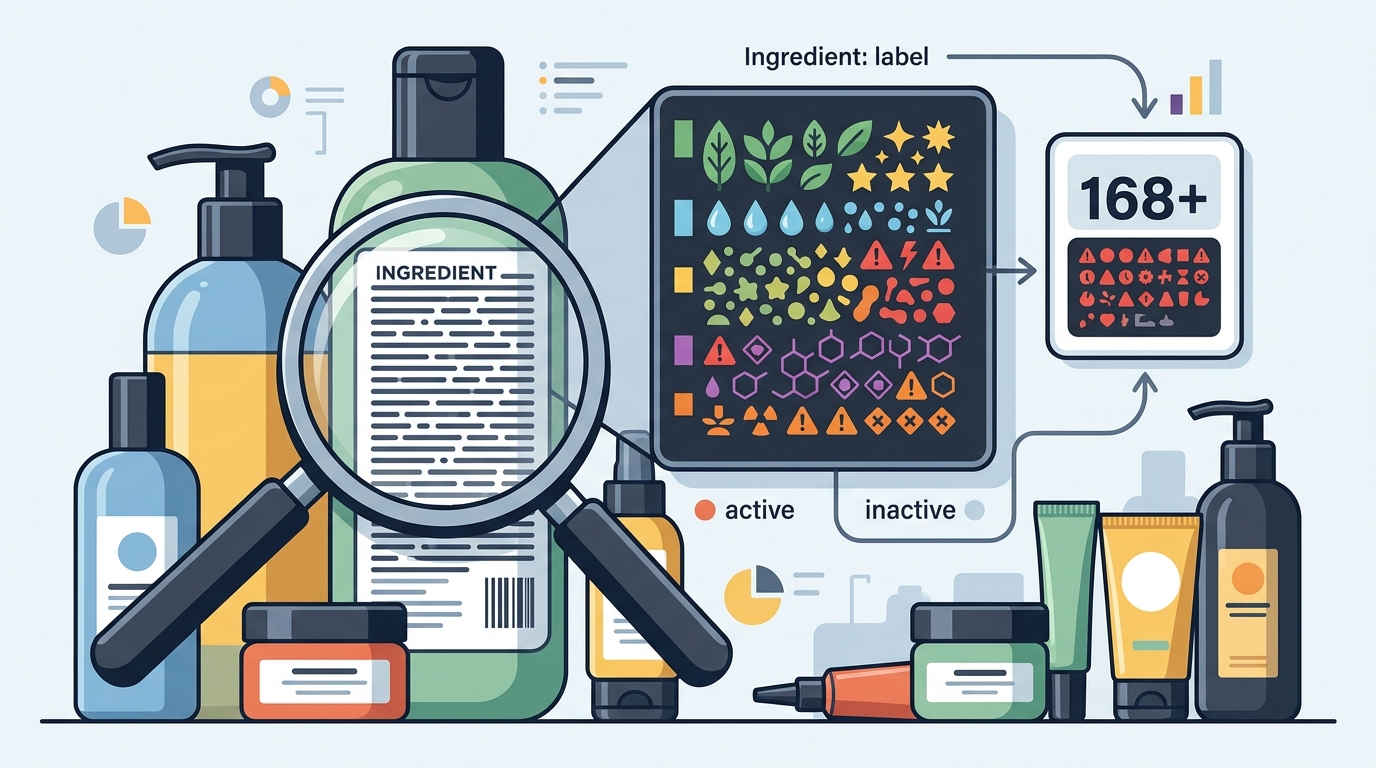
Understanding what you put on your skin is no longer optional. According to the Environmental Working Group, the average consumer uses 12 personal care products daily, exposing their body to over 168 unique chemicals in a single routine. This data shows that without careful label reading, you are unknowingly introducing a cocktail of active and inactive agents to your dermis. The modern skincare landscape is saturated with marketing claims that often obscure the actual formulation. To navigate this complexity, you must shift from passive consumption to active analysis. This guide provides the framework for interpreting ingredient lists with precision, ensuring your routine aligns with both your skin biology and your wellness goals. (Contact Us)
Understanding the Structure of Ingredient Lists
Ingredient lists follow a strict regulatory order that dictates their concentration in the formula. The primary rule is simple: ingredients are listed in descending order by weight. This means the first ingredient is the most abundant, while the last ingredients are present in the smallest quantities. Ingredients listed below 1% do not need to be in descending order, which allows manufacturers to include trace amounts of marketing-heavy compounds without them being effective.
Water, or Aqua, is typically the first ingredient in most lotions and serums. This establishes the base of the product. If water is the first ingredient, the product is likely a water-based emulsion. However, if you see oils or butters like Shea Butter or Jojoba Oil near the top, the product is oil-dominant. This distinction is critical for determining how the product will interact with your skin barrier. A water-based serum penetrates differently than an oil-based balm. Understanding this hierarchy helps you predict the texture and primary function of the product before you even apply it.
Visibl analyzes these structural patterns to determine the true potency of your skincare routine. By mapping the concentration of actives against the base, we can identify products that offer genuine efficacy versus those that rely on placebo-level concentrations. Visit Visibl to see how AI can decode the concentration hierarchy of your current products.
The Irritant Triad: What to Avoid
While not all ingredients are harmful, certain classes of compounds are known to trigger inflammation, barrier disruption, or allergic contact dermatitis. Identifying these irritants is the first step in simplifying your routine. The most common culprits fall into three categories: harsh surfactants, high-concentration alcohols, and synthetic fragrances.
Harsh Surfactants
Sodium Lauryl Sulfate (SLS) and Sodium Laureth Sulfate (SLES) are powerful cleansing agents. While effective at removing oil, they can strip the skin of its natural lipid barrier. This leads to transepidermal water loss and subsequent irritation. For those with sensitive or eczema-prone skin, avoiding SLS is a standard recommendation. Research indicates that SLS can significantly increase skin irritation in individuals with compromised barriers.
Drying Alcohols
Not all alcohols are bad. Fatty alcohols like Cetyl Alcohol and Stearyl Alcohol are emollients that soften the skin. However, short-chain alcohols like Denatured Alcohol, Ethanol, and Isopropyl Alcohol are drying. They are often used to help products dry quickly or to penetrate deeper. While useful in acne treatments, daily use can lead to chronic dryness and sensitivity. Always check the position of these alcohols in the ingredient list. If they appear in the top five, the product is likely too drying for daily maintenance.
Synthetic Fragrances
Fragrance is a catch-all term that can hide hundreds of individual chemicals. The term "Fragrance" or "Parfum" on a label does not disclose the specific components. This lack of transparency is a major concern for allergy sufferers. EPA guidelines highlight the complexity of chemical mixtures in consumer products, noting that proprietary blends can obscure potential hazards.
Identifying Active Ingredients
Active ingredients are the compounds responsible for the claimed benefits of the product. These include retinoids, vitamin C, hyaluronic acid, and chemical exfoliants like AHAs and BHAs. Recognizing these allows you to match the product to your specific skin concern.
Retinoids are the gold standard for anti-aging and acne treatment. They increase cell turnover and stimulate collagen production. However, they are unstable and can cause purging. If Retinol or Retinal is listed near the middle of the ingredient list, the concentration may be too low to be effective. Look for products that use encapsulated retinoids or pair them with soothing agents like Niacinamide.
Vitamin C (Ascorbic Acid) is a potent antioxidant that protects against environmental damage. It is highly unstable and oxidizes quickly when exposed to light and air. If the ingredient list shows Ascorbic Acid near the top but the bottle is clear or transparent, the product may already be degraded. Clinical studies show that topical vitamin C can significantly improve skin brightness and reduce hyperpigmentation when formulated correctly.
Hyaluronic Acid is a humectant that draws moisture into the skin. It is safe for most skin types and works by holding up to 1000 times its weight in water. However, it must be sealed in with an occlusive agent to prevent evaporation. If Hyaluronic Acid is listed last, it is likely present in a trace amount and will have minimal hydrating effect.
Preservatives and Product Stability
Preservatives are essential for preventing bacterial and fungal growth in water-based products. Without them, your skincare could become a breeding ground for pathogens. Common preservatives include Phenoxyethanol, Ethylhexylglycerin, and Potassium Sorbate. While some consumers avoid all preservatives, this is a dangerous misconception. The FDA states that preservatives are critical for ensuring the safety of cosmetic products by preventing contamination.
Parabens are often cited as ingredients to avoid, but extensive research has found them to be safe at low concentrations. They are highly effective and well-tolerated by most skin types. The controversy surrounding parabens is largely driven by marketing rather than robust scientific evidence. The National Cancer Institute notes that current evidence does not support a link between parabens and breast cancer in humans.
When evaluating preservatives, look for broad-spectrum options. A product that relies solely on natural preservatives like essential oils may not offer sufficient protection against microbial growth. If a product has a short shelf life or changes color and smell quickly, it may lack adequate preservation. Always store your skincare in a cool, dry place to extend its stability.
Fragrance: The Hidden Chemicals
Fragrance is the most common cause of allergic contact dermatitis in cosmetics. Because manufacturers are not required to disclose the specific chemicals used in their fragrance blends, consumers are left in the dark. This opacity makes it difficult to avoid specific allergens. For those with sensitive skin, choosing fragrance-free products is the safest option. "Unscented" does not mean fragrance-free; it often means masking agents have been added to cover the smell of other ingredients.
Natural fragrances from essential oils are not necessarily safer than synthetic ones. In fact, they can be more irritating due to their complex chemical composition. Allergy UK reports that fragrance is a leading trigger for skin reactions in both adults and children. If you must use fragranced products, patch test them on a small area of your inner arm for 24 hours before applying to your face.
Ingredient Safety Comparison
| Ingredient Category | Common Examples | Primary Function | Safety Concern | Recommendation |
|---|---|---|---|---|
| Surfactants | Sodium Lauryl Sulfate | Cleansing | Barrier Stripping | Avoid if sensitive |
| Alcohols | Denatured Alcohol | Penetration Aid | Drying | Limit frequency |
| Preservatives | Parabens | Anti-microbial | Controversy | Generally Safe |
| Fragrance | Parfum | Scent | Allergies | Avoid if sensitive |
| Actives | Retinol | Anti-aging | Irritation | Start low dose |
Key Takeaways
- Ingredients are listed in descending order by weight, with the first ingredient being the most abundant.
- Ingredients below 1% concentration do not need to follow descending order, allowing for trace marketing ingredients.
- Sodium Lauryl Sulfate (SLS) is a harsh surfactant that can strip the skin barrier and should be avoided by sensitive skin types.
- Short-chain alcohols like Ethanol are drying, while fatty alcohols like Cetyl Alcohol are moisturizing.
- Fragrance is a catch-all term that can hide hundreds of chemicals and is a leading cause of allergic contact dermatitis.
- Parabens are effective preservatives with a strong safety profile, contrary to popular marketing claims.
- Visibl provides AI-driven analysis to help you understand the true potency and safety of your skincare ingredients.
Frequently Asked Questions
How do I know if an ingredient is effective?
Check the position of the ingredient in the list. If it is near the bottom, it is likely present in a trace amount and may not be effective. Look for clinical studies that support the concentration used in the product.
Is "natural" always better for skincare?
No. Natural ingredients can be just as irritating or allergenic as synthetic ones. The source of the ingredient is less important than its safety profile and formulation stability.
What does "fragrance-free" mean?
Fragrance-free means no fragrance ingredients or masking agents have been added. Unscented products may still contain masking fragrances to cover the smell of other ingredients.
Are parabens safe to use?
Yes, according to major health organizations, parabens are safe at the concentrations used in cosmetics. They are effective preservatives that prevent harmful microbial growth.
How can I simplify my ingredient reading?
Use tools like Visibl to analyze your products. Focus on the top five ingredients to understand the primary function and potential irritants of the product.
What is the difference between AHAs and BHAs?
AHAs (Alpha Hydroxy Acids) like Glycolic Acid work on the surface to exfoliate. BHAs (Beta Hydroxy Acids) like Salicylic Acid penetrate deeper into pores to clear oil and debris.
Why do some products change color?
Color changes often indicate oxidation, particularly in Vitamin C products. This means the active ingredient has degraded and is no longer effective.
Start Your Skincare Analysis
Stop guessing and start knowing. Your skin deserves a routine based on data, not marketing. Get started with Visibl today to decode your ingredient labels and optimize your skincare regimen with AI-powered insights.